

Syllabus: GS1/Art & Culture
Context
- Archaeologists believe the findings at Virli Khandar could significantly contribute to understanding megalithic cultures in the region and their broader cultural practices.
key findings from the site
- The site has a unique burial pattern like it has stone circles and within them menhirs, making it a composite megalithic structure (a combination of two burial types).
- In contrast, nearby sites such as Pimpalgaon Nipani and Tirota Kheri feature primarily dolmen burials, making Virli Khandar distinct.
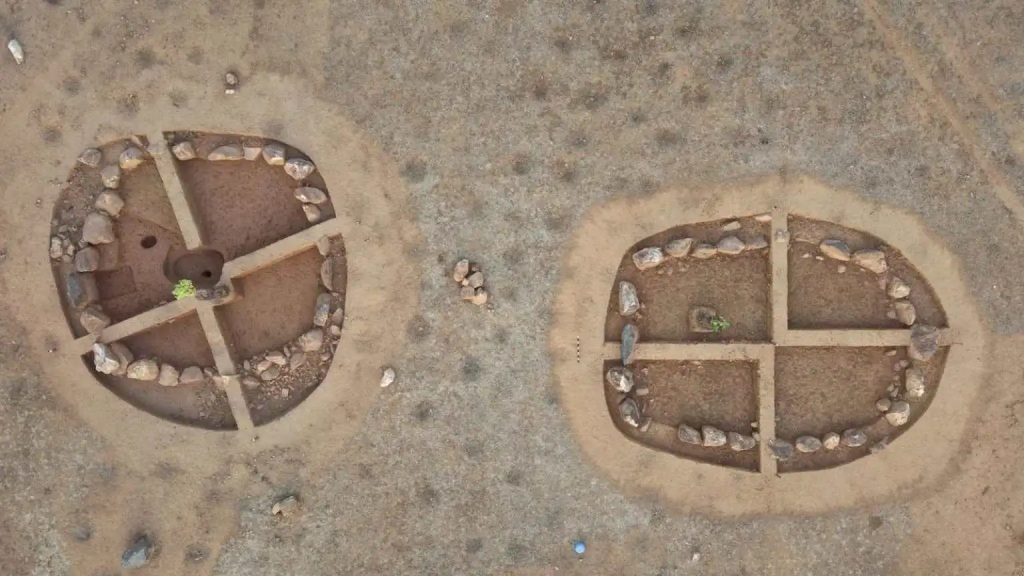
- Significant artifacts have been recovered from one of the burials, including copper objects such as a necklace, iron implements like axes, chisels, ladles and arrowheads, semi-precious stone beads, notably etched carnelian beads, and a gold earring.
- One of the most striking discoveries is a unique cluster of pottery, not previously reported in the Vidarbha region. In one burial, nearly 50 pots were found arranged systematically, with larger bowls covered by inverted bowls.
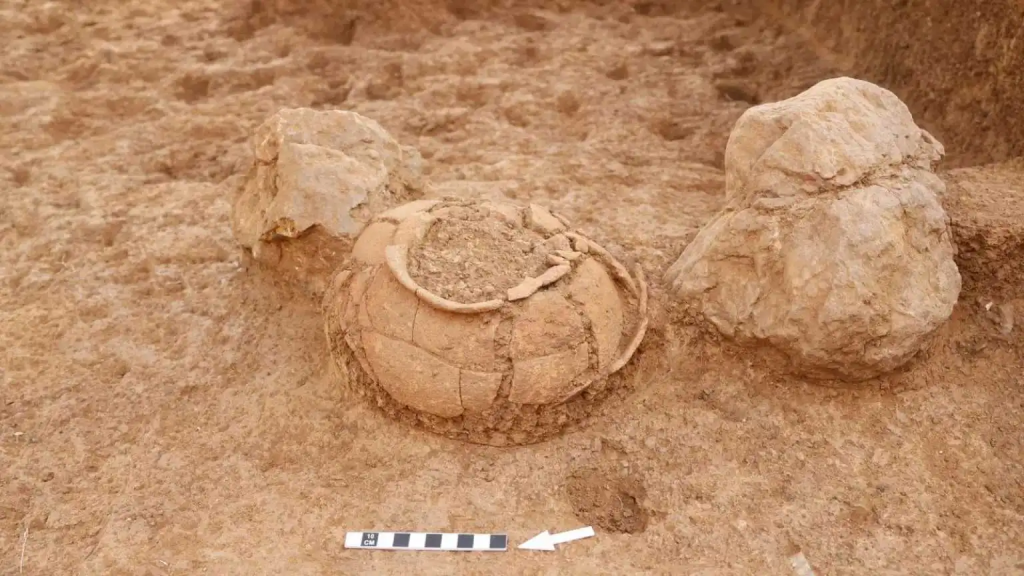
- The pots were carefully placed over a layer of black cotton soil laid above the natural lateritic (murum) base.
- The largest surviving menhir, the Grand Menhir Brisé or the Great Broken Menhir in Brittany, France, once stood at 20.6 m tall.
What are Menhirs?
- A menhir is a standing or an upright stone, which is usually tapered at the top. It is man-made, in that it is sculpted and placed by humans, and usually quite large.
- Menhirs can either be found alone, or as a part of a larger complex of prehistoric megaliths, simply, large stone structures. While the exact purpose of many megalithic sites is debated, they likely served ceremonial functions.
- The Mudumal Megalithic Menhirs in Telangana’s Narayanpet district, dating back approximately 3,500 to 4,000 years, have been added to a tentative list of UNESCO World Heritage Sites from India.
Iron Age Megalithic Culture in India (c. 1200 BCE – 300 CE)
- It represents a significant archaeological phase in India marked by the use of iron technology and distinctive burial practices involving large stones (megaliths).
- It is found across Peninsular India, especially Deccan Plateau, South India (Karnataka, Tamil Nadu, Andhra Pradesh), Vidarbha (Maharashtra); and Eastern India (Odisha).
Types of Megalithic Burials
- Sepulchral (Burial) Monuments: Stone circles; Dolmens (table-like structures); Cists (stone-lined graves); Menhirs (upright stones); and Cairn circles (heap of stones)
- Non-Sepulchral / Memorial: Cenotaphs (symbolic burials without bodies).
Key Features of Megalithic Culture
- Iron Technology: Extensive use of iron tools and weapons like axes, spearheads, arrowheads.
- It marks the transition from Bronze Age to Iron Age.
- Pottery: Black-and-red ware (BRW) is characteristic, often found in burials with grave goods.
- Grave Goods: Objects buried with dead are iron tools, copper ornaments, beads, reflecting status differentiation, and belief in afterlife.
- Skeletal Remains: Extended or secondary burials; sometimes absent due to preservation issues.
Previous article
News In Short 25-04-2026
Next article
Atlantic Meridional Overturning Circulation (AMOC)
